
NewsDetails
Why Oil Filters Are Important for Engine Life
author:Chengrui time:2026-02-11 19:22:27 Click:59
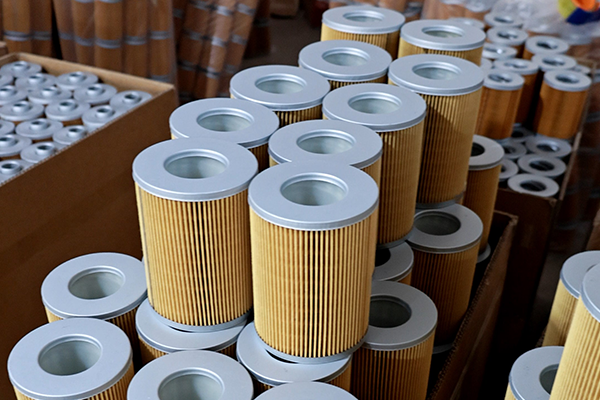
Understanding oil filter importance is essential for anyone responsible for engine reliability, performance stability, and long-term operating cost. Whether in passenger vehicles, industrial equipment, agricultural machinery, or power generation systems, oil filters protect engines by keeping lubrication systems clean and efficient.
Behind effective filtration is professional manufacturer production and scalable factory production, ensuring that oil filters maintain structural integrity, filtration accuracy, and stable performance for bulk supply markets. This article explains why oil filter importance is critical for engine life, how oil filters work to reduce wear, and how production quality supports dependable filtration solutions.
What Does an Oil Filter Do?
An oil filter removes contaminants from engine oil before the oil circulates through critical engine components. During operation, engines naturally generate particles such as:
Metal shavings from friction
Carbon deposits from combustion
Dust and environmental debris
Sludge formed by oil oxidation
Without proper filtration, these particles circulate with the oil and accelerate wear on bearings, pistons, camshafts, and hydraulic systems.
The core of oil filter importance lies in preventing these contaminants from damaging engine surfaces while maintaining smooth oil flow and stable pressure.
Through controlled factory production, oil filters are built with precise dimensions and consistent media performance to match different engine requirements.
Oil Filter Importance in Reducing Engine Wear
One of the main reasons oil filter importance matters is wear control. Engines operate under high pressure, heat, and speed. Even microscopic particles can behave like abrasives when trapped between moving surfaces.
Oil filters reduce:
Surface scratching
Bearing fatigue
Piston ring damage
Valve train deterioration
By continuously removing particles, oil filters help maintain a protective oil film that separates metal components.
During manufacturer production, filtration media is engineered to balance efficiency and flow resistance so that protection does not compromise lubrication performance.
Protecting Lubrication Efficiency
Lubrication is not just about supplying oil; it is about supplying clean oil at the correct pressure and temperature.
Dirty oil:
Increases friction
Reduces heat dissipation
Accelerates oxidation
Causes pressure instability
The oil filter importance becomes clear when considering how filtration preserves oil quality. By removing debris and oxidation byproducts, the oil retains its lubricating and cooling capabilities for longer periods.
Advanced factory production controls pleating geometry and pore structure so oil flows evenly while contaminants are retained.
Contamination Control and Engine Longevity
Contamination is the hidden enemy of engines. It enters from:
Air intake leaks
Fuel byproducts
Internal wear
Assembly residues
If contamination is not controlled, it builds up and restricts oil passages, damages seals, and reduces pump efficiency.
The strategic role of oil filter importance is contamination management. Oil filters trap and hold particles before they can reach sensitive zones such as crankshaft bearings and turbochargers.
Scalable manufacturer production ensures oil filters provide consistent dirt-holding capacity for long service intervals in bulk applications.
Supporting Cold Starts and Pressure Stability
Another key aspect of oil filter importance is pressure control, especially during cold starts. When oil is cold, viscosity increases, making flow more difficult.
Oil filters are designed with:
Bypass valves to prevent oil starvation
Anti-drainback valves to retain oil in the filter
Structural reinforcement to resist collapse
These elements ensure that oil reaches components quickly after startup.
Through precision factory production, valve calibration and housing strength are controlled to support stable pressure behavior across temperature ranges.
Extending Maintenance Intervals
Oil filters directly affect how long oil remains usable. Clean oil resists oxidation, thickening, and sludge formation.
With effective filtration:
Oil change intervals can be extended
Downtime is reduced
Operating costs are lowered
Engine reliability improves
This is another reason oil filter importance matters for fleets, industrial users, and equipment operators.
Modern manufacturer production supports long-life oil filter designs by increasing media surface area and strengthening structural components for heavy-duty environments.
Oil Filter Importance for Different Applications
Different engines face different operating challenges, which makes oil filter importance universal across industries.
Passenger Vehicles
Require balanced filtration for daily driving, variable temperatures, and stop-start operation.
Industrial Equipment
Needs reinforced filtration for extended running hours and heavy contamination levels.
Agricultural Machinery
Operates in dusty, humid, and vibrating environments, demanding durable oil filter structures.
Power Generation Systems
Requires stable filtration for continuous operation and pressure consistency.
Scalable factory production allows oil filter configurations to be adapted for each application while maintaining filtration accuracy.
How Production Quality Strengthens Oil Filter Importance
Even the best design fails without manufacturing consistency. Media pleating, adhesive curing, gasket molding, and housing forming all influence real-world performance.
Advanced manufacturer production integrates:
Automated assembly
Leak testing
Pressure testing
Dimensional inspection
This ensures every oil filter delivered in bulk supply supports the full oil filter importance in protecting engines.
Reliable factory production also improves traceability, repeatability, and performance stability across large production volumes.
Bulk Supply Advantage in Oil Filter Systems
Behind every effective oil filter importance strategy is dependable production capacity. From raw material sourcing to assembly and packaging, each stage affects filtration reliability.
Professional manufacturer production supports customization for different engines and markets. Strong factory production enables consistent bulk delivery without sacrificing filtration accuracy or structural integrity.
This production advantage reduces operational risk for fleets, industrial users, and maintenance planners.
Economic Value of Oil Filter Importance
Beyond technical protection, oil filter importance also delivers financial benefits:
Reduced engine repair costs
Extended component life
Lower oil consumption
Improved fuel efficiency
By maintaining clean oil circulation, engines operate closer to their designed efficiency and durability targets.
With reliable factory production, oil filter systems contribute directly to long-term cost control and operational stability.
Conclusion
The true oil filter importance lies in protecting engines from contamination, wear, pressure instability, and lubrication breakdown. By removing harmful particles, stabilizing oil flow, supporting cold starts, and extending service life, oil filters play a central role in engine longevity.
With professional manufacturer production and dependable factory production capability, oil filters can be supplied in bulk with consistent structure, filtration accuracy, and long-term reliability.
Understanding oil filter importance is not only a maintenance decision, but a strategic investment in engine performance, durability, and operational efficiency across automotive and industrial applications.
References
GB/T 7714:Jackson R L. Handbook of Lubrication and Tribology, Volume II: Theory and Design[J]. 2012.
MLA:Jackson, R. L. "Handbook of Lubrication and Tribology, Volume II: Theory and Design." (2012): 14-1.
APA:Jackson, R. L. (2012). Handbook of Lubrication and Tribology, Volume II: Theory and Design.
 Recommended Products


 Contact us
—— Contact:Mr. Gao
—— Tel:+86 19565234361
—— Email:gaomark706@gmail.com
—— Url:https://www.jzl-filter.com
—— Address:Hejian City, Cangzhou City, Hebei Province