
NewsDetails
Filter Media Technology: Cellulose vs Synthetic vs Nanofiber Compared
author:Chengrui time:2026-09-28 14:07:19 Click:110
Two filters that look identical on the shelf can protect an engine very differently. The difference usually isn't the can or the gasket — it's the media inside. The fibers that actually catch contaminants have evolved considerably, and understanding the three main categories helps explain why a premium filter often outperforms a bargain one by a wide margin.
Cellulose Media: The Traditional Workhorse
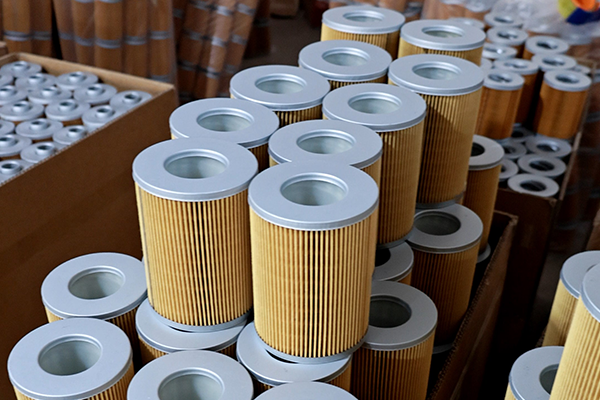
Cellulose (paper-based) media has been the standard for decades. It's made from wood pulp fibers, processed into a pleated sheet. It works, it's cheap, and it's perfectly adequate for many applications. Typical cellulose media captures particles down to about 20 to 40 microns with reasonable efficiency.
The limitation is structural. Cellulose fibers are relatively large and irregular, which means the media needs a lot of surface area to achieve useful dirt-holding capacity. Under high flow or thermal cycling, cellulose can degrade, shed, or lose pleat shape. For light-duty, short-interval service, none of that matters much. For severe-duty applications running long drain intervals, it becomes a constraint.
Synthetic Media: Engineered Fibers
Synthetic media uses manufactured polymer fibers — often blends of polyester, nylon, or glass — calibrated for consistent diameter and distribution. Because the fibers can be engineered, synthetic media achieves smaller pore sizes and more uniform structure than cellulose, capturing particles in the 10 to 25 micron range with higher efficiency.
The real advantage shows up under stress. Synthetic media resists thermal degradation and maintains its pleat shape better under pulsing flow, which means it holds more dirt before restriction climbs. That translates to longer service life or, equally valuable, consistent protection throughout the interval rather than gradual decline. Synthetic media is the default in most premium heavy duty oil and fuel filters for good reason.
Nanofiber Media: The Performance Frontier
Nanofiber media adds an ultra-fine layer — fibers measured in nanometers — onto a conventional substrate. This layer acts as a sieve for the smallest particles while the underlying media provides structural support and bulk dirt-holding capacity. The result is higher initial efficiency at small micron sizes without the early restriction penalty you'd get from simply making all the fibers finer.
In practical terms, nanofiber media can capture significantly more of the 5 to 15 micron particles that cause the most long-term wear. For fleets running extended drain intervals or operating in severe contamination environments, nanofiber elements often pay for themselves through longer element life and better engine protection. They're also common in hydraulic applications where fine contamination control directly protects expensive valves.
How to Read the Claims
Marketing language around media can be murky. A few terms actually mean something:
"Absolute" micron rating — the largest particle that can pass, a stricter standard than "nominal."
Beta ratio (β) — capture efficiency at a given size; β₁₀ = 200 means 99.5% of 10-micron particles are caught.
Dirt-holding capacity — how much contaminant the element holds before reaching terminal restriction.
Efficiency at ISO 4548 / SAE J1858 — standardized test results you can compare across brands.
A filter advertised only by "nominal" micron rating and no beta ratio or test standard is hard to evaluate objectively. When protection matters, look for elements with published test data rather than vague superlatives.
Matching Media to the Job
There's no single "best" media for everything. Cellulose is fine for short-interval light service where cost dominates. Synthetic is the sensible default for most heavy duty oil and fuel applications. Nanofiber earns its premium in extended-drain, high-contamination, or fine-tolerance (hydraulic) environments where small-particle control pays off directly.
The key is intentionality: specifying media performance based on how the equipment is actually used, rather than buying whatever is cheapest or what the parts catalog lists first. The media is the part of the filter doing the work — it deserves more attention than the can it comes in.
References
ISO 4548-12. (2017). Methods of Test for Full-Flow Lubricating Oil Filters for Internal Combustion Engines. International Organization for Standardization.
SAE International. (2019). SAE J1858: Filter Media Performance Testing for Engine Lubrication. Society of Automotive Engineers.
Filtration & Separation Journal. (2021). Nanofiber Layers in Automotive Filtration: Efficiency and Capacity Trade-offs. 58(4), 22–31.
Wincek, M. et al. (2020). Synthetic vs Cellulose Media in Heavy-Duty Oil Filtration: A Field Study. Tribology Transactions, 63(2), 201–214.
Donaldson Company. (2022). Engine Filtration Technology White Paper: Media Science. Donaldson Technical Publications.
 Recommended Products



 Contact us
—— Contact:Mr. Gao
—— Tel:+86 19565234361
—— Email:gaomark706@gmail.com
—— Url:https://www.jzl-filter.com
—— Address:Hejian City, Cangzhou City, Hebei Province