
NewsDetails
Diesel Fuel Filter Working Principle Explained
author:Chengrui time:2026-02-02 14:49:45 Click:61
In modern diesel engines, fuel cleanliness is critical to performance, efficiency, and long-term durability. Contaminants such as dust, rust, water, and microbial growth can quickly damage injectors, pumps, and combustion components. That is why the diesel fuel filter plays a central role in protecting fuel systems and ensuring stable engine operation.
With professional manufacturer production and scalable factory production capability, diesel fuel filter products can be supplied in bulk with consistent filtration performance and dimensional accuracy. This article explains the diesel fuel filter working principle, its structure, filtration process, and how production quality supports reliable operation in demanding environments.
What Is a Diesel Fuel Filter?
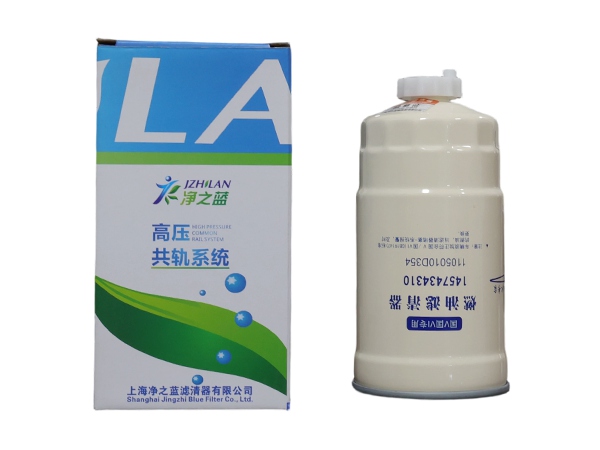
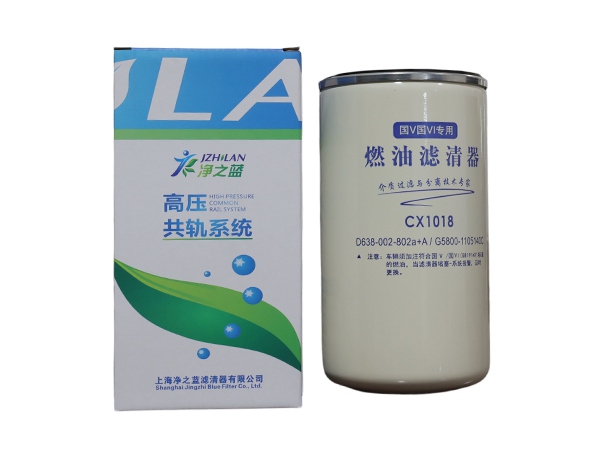
A diesel fuel filter is a device installed in the fuel line to remove solid particles and separate water from diesel fuel before it reaches the injection system. Diesel engines operate at very high pressure, and even microscopic contaminants can cause severe wear or blockage.
Compared with gasoline systems, diesel fuel systems are more sensitive to contamination because of tighter injector tolerances and higher injection pressure. Therefore, the diesel fuel filter is designed not only to trap particles, but also to manage water separation and maintain stable fuel flow.
Through controlled factory production, each diesel fuel filter is built with precise geometry, media quality, and sealing performance to meet industrial and automotive standards.
Core Components of a Diesel Fuel Filter
Understanding the diesel fuel filter working principle begins with its structure. Although designs vary, most diesel fuel filter units include:
·Filter media for particle removal
·Housing for structural protection
·Water separation layer
·Sealing gaskets
·Inlet and outlet channels
·Drain port for water discharge
These components work together to ensure fuel enters the system clean, dry, and at the correct pressure.
During manufacturer production, materials are selected and assembled to balance filtration efficiency, flow capacity, and service life for different diesel applications.
Diesel Fuel Filter Working Principle
The diesel fuel filter working principle can be divided into three main stages: fuel entry, filtration, and delivery.
Fuel Entry
Diesel fuel enters the filter housing from the fuel tank under pump pressure. At this stage, fuel may already contain dust, metal particles, water droplets, and organic contamination picked up during storage and transport.
The inlet design guides fuel evenly across the filter surface, preventing localized pressure concentration.
Filtration Process
Once inside, fuel passes through the filter media. The media is usually made from cellulose, synthetic fiber, or multilayer composite materials.
The pores in the media trap solid contaminants while allowing clean fuel to flow through. Smaller particles are captured deeper in the layers, improving dirt-holding capacity and extending service life.
For the diesel fuel filter, this stage is critical because injectors often tolerate particles only a few microns in size.
Water Separation
Diesel fuel often contains moisture, either from condensation or fuel handling. Water can cause corrosion, injector seizure, and microbial growth.
Many diesel fuel filter designs integrate a water separation mechanism. Heavier water droplets coalesce and settle at the bottom of the housing due to gravity. Some systems use hydrophobic layers to repel water while allowing diesel to pass.
Collected water is discharged through a drain valve during maintenance.
Clean Fuel Delivery
After filtration and water separation, clean diesel exits the filter and flows toward the injection pump and injectors. Stable pressure and uninterrupted flow are essential for combustion efficiency and engine reliability.
Through precise factory production, flow resistance and pressure behavior are calibrated so each diesel fuel filter supports the correct operating range.
Importance of Flow Capacity in Diesel Fuel Filter Design
Flow capacity directly affects engine performance. If a diesel fuel filter restricts fuel delivery, the engine may experience power loss, hard starting, or unstable operation.
A properly designed diesel fuel filter balances:
·Filtration accuracy
·Fuel flow rate
·Pressure stability
·Dirt-holding capacity
If the filter is too small, it clogs quickly. If it is too large without proper design, pressure regulation may become unstable.
During manufacturer production, flow testing and pressure testing ensure that each diesel fuel filter supports the engine’s demand across temperature and load ranges.
Filtration Efficiency and Service Life
Filtration efficiency determines how well a diesel fuel filter removes harmful particles. Higher efficiency protects injectors and pumps but must also maintain adequate flow.
The surface area of the media plays a key role. More area allows the diesel fuel filter to hold more contaminants before restriction occurs.
For heavy-duty equipment and long service intervals, selecting a diesel fuel filter with sufficient media area and structural strength improves reliability and reduces maintenance frequency.
Balanced design during factory production ensures that efficiency and service life are optimized together.
Pressure Resistance and Structural Integrity
Diesel fuel systems operate under fluctuating pressure. During cold starts or heavy load, pressure spikes may occur.
The diesel fuel filter housing, seals, and internal support must withstand these conditions without deformation or leakage.
Professional manufacturer production integrates burst testing, vibration testing, and sealing inspection to guarantee that each diesel fuel filter performs safely under real operating loads.
Application Scenarios for Diesel Fuel Filters
Diesel fuel filter systems are widely used in:
·Commercial vehicles and trucks
·Construction and mining machinery
·Agricultural equipment
·Marine engines
·Power generation systems
Each application introduces different contamination levels and operating environments. Therefore, diesel fuel filter selection must consider fuel quality, service interval, temperature range, and vibration conditions.
With scalable factory production, diesel fuel filter products can be supplied in various sizes and specifications for global markets.
How Production Quality Impacts Diesel Fuel Filter Performance
Even the best design fails without reliable manufacturing. Media bonding, gasket molding, housing forming, and assembly precision all affect performance.
Modern manufacturer production integrates automation, dimensional inspection, and functional testing to ensure consistent diesel fuel filter quality across large-volume supply.
Strong factory production capability also supports traceability and repeatability, reducing failure risk and improving customer confidence in long-term use.
Bulk Supply Advantage for Diesel Fuel Filter Solutions
Behind every reliable diesel fuel filter is dependable production capacity. From raw material preparation to assembly, testing, and packaging, each step influences filtration stability and durability.
Scalable manufacturer production supports customized diesel fuel filter ranges for different industries. Advanced factory production enables stable bulk delivery without sacrificing performance consistency.
This production advantage supports fleet operators, industrial users, and equipment manufacturers with long-term supply reliability.
Conclusion
Understanding the diesel fuel filter working principle helps explain how clean, dry fuel protects injectors, pumps, and combustion systems. Through staged filtration, water separation, and controlled flow delivery, the diesel fuel filter ensures stable engine operation under demanding conditions.
With professional manufacturer production and reliable factory production capability, diesel fuel filter solutions can be supplied in bulk with consistent quality, flow performance, and service life.
For modern diesel engines and industrial systems, selecting the right diesel fuel filter is not only a technical decision, but a strategic investment in performance stability, operational efficiency, and long-term reliability backed by dependable production strength.
References
GB/T 7714:Handbook of diesel engines[M]. Springer Science & Business Media, 2010.
MLA:Mollenhauer, Klaus, and Helmut Tschöke, eds. Handbook of diesel engines. Springer Science & Business Media, 2010.
APA:Mollenhauer, K., & Tschöke, H. (Eds.). (2010). Handbook of diesel engines. Springer Science & Business Media.
 Recommended Products



 Contact us
—— Contact:Mr. Gao
—— Tel:+86 19565234361
—— Email:gaomark706@gmail.com
—— Url:https://www.jzl-filter.com
—— Address:Hejian City, Cangzhou City, Hebei Province