
NewsDetails
Air Filters and Engine Performance: Maintenance Guide for Trucks and Equipment
author:Chengrui time:2026-09-22 11:08:14 Click:106
Of all the filters on a truck or piece of heavy equipment, the air filter is the one drivers notice least — and neglect most. It doesn't leak dramatically. It doesn't trigger a warning light the way a fuel filter restriction might. It just sits there, slowly choking the engine of the one thing combustion cannot live without: air. By the time performance drops enough to feel, you've already lost weeks of fuel economy and added measurable wear.
What the Air Filter Actually Does
An internal combustion engine is, at its core, an air pump. For every gallon of diesel burned, the engine consumes roughly 12,000 to 15,000 gallons of air. That air is full of whatever the environment offers — road dust on a highway, fine silica at a construction site, pollen and agricultural debris in rural areas. Without filtration, those abrasive particles would sandblast cylinder walls and contaminate the oil almost immediately.
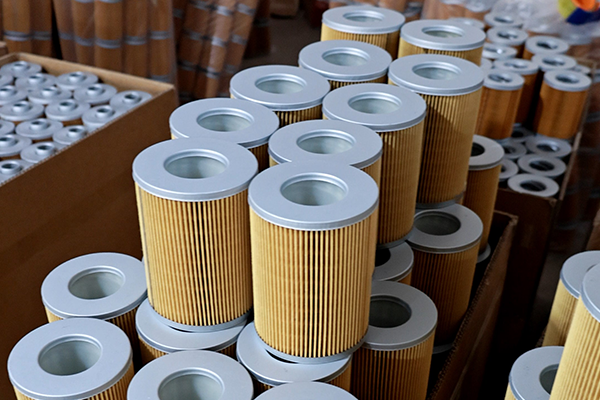
The air filter's job is to strip out those particles before they reach the intake manifold. Modern heavy duty paper or synthetic media can capture particles down to 5 to 10 microns with high efficiency. A quality heavy duty air filter is rated not just by what it catches, but by how much it can hold before restriction rises to the point that the engine starts starving for air.
The Hidden Cost of Restriction
Air filters don't fail by letting dirt through all at once. They fail by gradually clogging. As the media loads with dust, the engine has to work harder to pull air through it. This restriction shows up in two ways that matter to operators: lost power and wasted fuel.
A moderately restricted air filter can reduce airflow enough that the engine control unit compensates by adjusting fueling — but only up to a point. Beyond that, power drops, especially under load. A truck that used to climb a grade at 65 mph now struggles at 58. The driver floors it, burns more fuel, and still goes slower. Studies on heavy duty fleet air filtration have shown that replacing a restricted air filter can improve fuel economy by 2 to 5 percent — a meaningful number across thousands of miles.
Turbocharged engines are especially sensitive. The turbocharger is driven by exhaust energy and supplies pressurized air to the cylinders. When intake restriction rises, the turbo has to spin harder to deliver the same boost, increasing exhaust backpressure and heat. Over time, this extra thermal and mechanical stress shortens turbo life.
Heavy Duty vs Standard Air Filters
Passenger car air filters live in a relatively clean, low-vibration world. Heavy duty air filters operate in dust, heat, vibration, and often in environments where the filter housing itself gets hammered by debris kicked up from the road or job site.
Heavy duty filters typically use a deeper pleat pack and more robust sealing to prevent bypass — air slipping around the media through a poorly sealed edge. Some use a two-stage design: a pre-cleaner (cyclonic or inertial) knocks out the bulk of coarse debris before the main media sees it, dramatically extending service life. Others incorporate a restriction indicator that pops a flag or triggers a dashboard light when it's time to service.
The sealing surface matters more than many realize. A filter that fits loosely in its housing lets unfiltered air past the edge — exactly the failure mode that bypasses all the media's hard work. Always verify the filter seats correctly and the housing clamp or cover is secured per spec.
Service Intervals: Don't Rely on Mileage Alone
Manufacturer intervals for air filters assume average conditions. In reality, the single biggest variable is the environment. A truck running dusty unpaved access roads can clog an air filter in a fraction of the recommended interval. A highway truck in clean air might go well beyond it.
The most reliable approach is a restriction gauge. Many heavy duty applications use a vacuum gauge plumbed into the clean side of the air filter; as restriction climbs toward the manufacturer's limit, the gauge tells you exactly when to service. Without one, a visual inspection during scheduled maintenance is the next best thing — but visual inspection alone can miss a filter that looks fine externally yet is internally loaded.
When servicing, never blow out a heavy duty air filter with compressed air and reuse it indefinitely. Compressed air can tear the delicate media fibers, creating paths for dirt to pass. Some fleets clean reusable pre-cleaners, but the primary media element should generally be replaced, not revived.
References
SAE International. (2019). SAE J726: Air Cleaner Test Code. Society of Automotive Engineers.
Caterpillar Inc. (2020). Engine Air Filtration and Restriction Monitoring Guidelines. Caterpillar Technical Publications.
U.S. Department of Energy, Fleet Management. (2021). Reducing Fuel Use Through Proper Air Filter Maintenance. DOE Technical Report.
Construction Equipment Magazine. (2022). Dust Control and Air Filtration on Heavy Equipment Job Sites. Industry Report.
Engel, L. & Kadec, S. (2018). Heavy-Duty Air Filtration: Efficiency, Capacity, and Total Cost of Ownership. Filtration Science Journal, 14(3), 112–128.
 Recommended Products



 Contact us
—— Contact:Mr. Gao
—— Tel:+86 19565234361
—— Email:gaomark706@gmail.com
—— Url:https://www.jzl-filter.com
—— Address:Hejian City, Cangzhou City, Hebei Province